
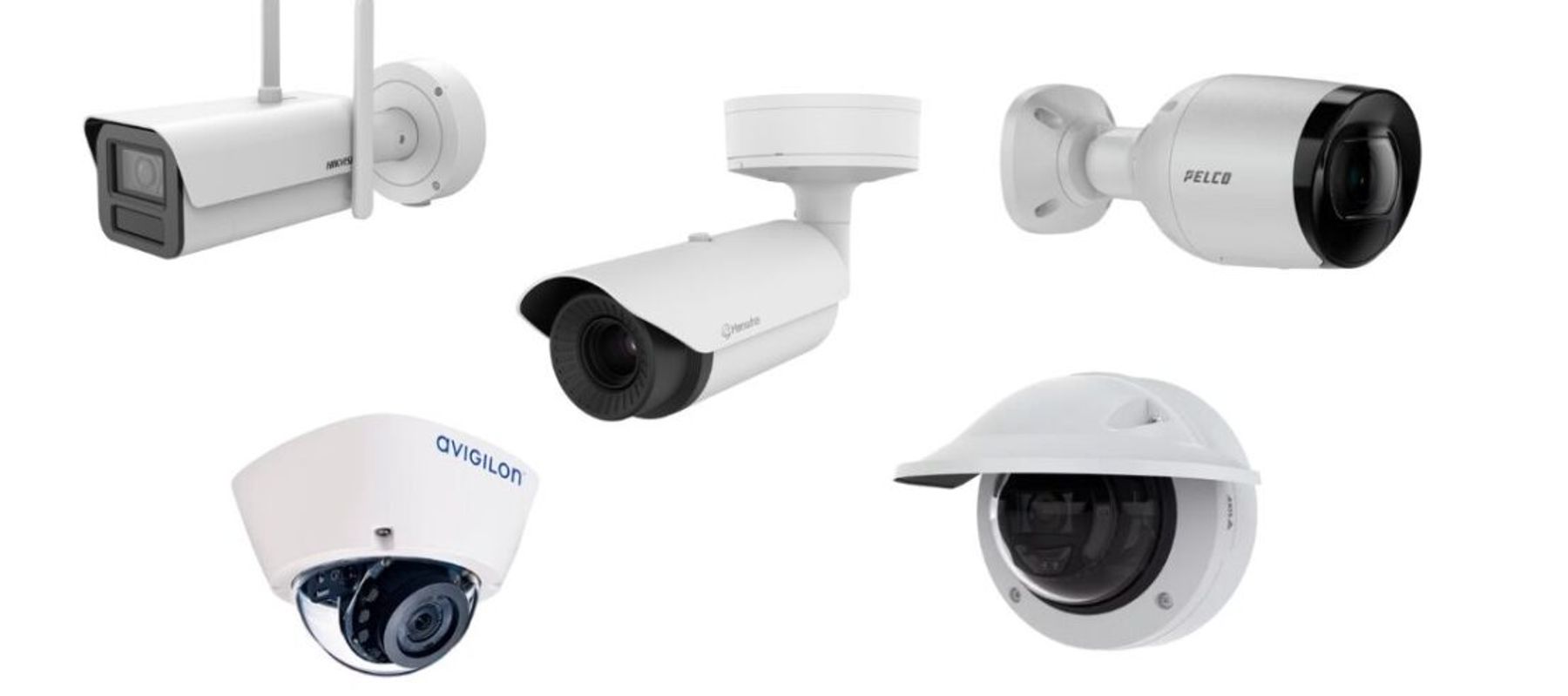
Why we use a camera-agnostic approach to CCTV - and what that actually means
Most CCTV companies push a single camera brand. We deliberately do not. Here is why camera-agnostic systems tend to perform better, last longer, and cost less to expand - and how Synology Surveillance Station makes it work in practice.
When a business calls us about CCTV, one of the first things we tell them is that we are not tied to any single camera manufacturer. For a lot of people that comes as a surprise. They expect us to say we only fit Hikvision cameras, or only Axis, or only whatever brand earns us the best margin. We do not work that way.
The term for this is camera-agnostic. It sounds like jargon, but the idea is simple: the recording system works with cameras from different manufacturers, so you can choose the best camera for each specific situation rather than fitting whatever one brand happens to make.
What camera-agnostic actually means
A traditional CCTV system is built around a DVR or NVR - a dedicated recording box - that often only works with cameras from the same manufacturer. If you buy a Dahua NVR, it works best with Dahua cameras. The same is often true for other brands. This locks you in.
A camera-agnostic system uses software-based recording that supports cameras via standard protocols - primarily ONVIF and RTSP. Almost every professional IP camera made today supports these protocols. That means the recording platform can work with cameras from Hikvision, Axis, Bosch, Hanwha, Vivotek, and dozens of others, all at the same time if needed.
In practice, this means we can pick the right camera for each location. A car park needs a different camera to a reception area. A low-light internal corridor needs different optics to an external wide-angle coverage point. When you are locked into one manufacturer, you take whatever that manufacturer makes in each category. When you are not, you can specify properly.
Why we chose Synology Surveillance Station
There are several good software-based NVR platforms available. We use Synology Surveillance Station running on Synology NAS hardware, and we have been doing so long enough to be confident it is the right choice for the types of installations we do.
Synology is best known as a network-attached storage manufacturer - the company makes NAS devices used in businesses for file storage, backup and network services. Their NAS units run a Linux-based operating system called DSM, and Surveillance Station runs as an application within that environment.
What makes it work well
The licensing model is straightforward. Each Synology NAS comes with two free camera licences, and additional licences are purchased per camera at a one-off cost. There is no annual subscription to record your own footage on your own hardware. For a 16-camera system, you pay for the licences once and that is it. Other platforms charge ongoing fees for the same functionality.
The hardware is reliable and purpose-built for always-on operation. NAS devices are designed to run 24 hours a day, seven days a week, which is exactly what a CCTV recording system needs to do. The drives used are surveillance-class - designed for continuous write operations rather than the start-stop pattern of typical file storage.
Remote access is built in and works well. Via Synology's secure relay service or direct connection, authorised users can view live footage and review recordings from a phone or computer without needing to open ports in the firewall or set up a VPN. For business owners who want to check in on their site, this matters.
Synology Surveillance Station also supports AI-based detection features on compatible cameras and NAS hardware - motion detection, person detection, vehicle detection - that reduce the number of false alerts without needing additional software or subscriptions.
A practical example
A recent installation for a manufacturing business in Coventry illustrates the approach. The site needed external coverage across a large yard with variable lighting conditions, internal coverage on the production floor, and a high-resolution camera on the main entrance for face recognition purposes.
The external yard cameras needed good low-light performance and wide coverage angles. The production floor needed cameras suited to a bright, high-contrast environment with long focal lengths to read detail at distance. The entrance camera needed a different sensor specification again.
Because we were not tied to one manufacturer, we specified the best fit for each location. The Synology NAS records all of them together, presents them in a single interface, and means the client has one system to learn rather than three. If a camera needs replacing in five years, we can fit whatever the best option is at that point - not whatever is still available from a vendor we committed to in 2025.
What about the NDAA compliance question?
Since 2019, US federal legislation (Section 889 of the National Defense Authorization Act) has restricted the use of equipment from certain Chinese manufacturers - including Hikvision and Dahua - in US federal government procurement. The UK has issued similar guidance for central government, and some sectors - schools, councils, NHS - apply this more broadly.
A camera-agnostic approach handles this cleanly. If a customer needs NDAA-compliant cameras, we specify accordingly - Axis, Hanwha, Bosch, and others are unaffected. The Synology recording platform is Taiwanese, not subject to the same restrictions. We do not have to redesign the whole system or swap out a proprietary NVR - we just specify different cameras.
For standard commercial installations where NDAA compliance is not a requirement, Hikvision cameras remain excellent value and performance. We are a Hikvision VASP (Value Added Solution Provider), which means our engineers are trained and assessed by Hikvision directly. But even then, we use them because they are the right choice, not because we are tied to them.
The honest answer to why this matters
The real reason camera-agnostic systems tend to work better over time is simple: they separate the recording platform from the camera hardware, and those two things develop on different timescales.
A NAS device and its software can be updated and expanded for years. Camera technology changes faster - resolution, sensor size, AI capability. If your recording system is locked to one camera brand, you are on their upgrade cycle, their pricing, and their product availability. If it is not, you can mix and match as the market moves.
We have customers who have been with us for ten years. The NAS hardware gets replaced every five or six years. Individual cameras get replaced as they fail or when a better option becomes available. None of that requires ripping out and replacing the whole system.
If you are looking at CCTV for your business and you want a system that will still be serviceable in a decade, ask whoever is quoting you whether they are tied to a single camera manufacturer. The answer tells you quite a lot about how they work.
Interested in CCTV Systems?
Our engineers cover Coventry, Warwickshire and the wider Midlands. Get a free, no-obligation site survey.