
What Access Control Does Your School Actually Need to Meet Its Safeguarding Duty?
KCSIE sets out what schools must do to keep children safe, but it stops short of telling you exactly what hardware to install. This article cuts through the ambiguity and explains what access control actually satisfies your safeguarding duty.
Keeping Children Safe in Education - KCSIE - is updated by the DfE each September. School leaders read it carefully, governing bodies sign off compliance statements, and designated safeguarding leads (DSLs) work through its implications for policy and practice. But KCSIE is deliberately non-prescriptive when it comes to physical security measures. It tells you what you must achieve, not what equipment to buy.
That gap between obligation and specification is where a lot of schools get stuck. We have carried out surveys at schools where the head teacher genuinely believed their site was adequately secured, only to find visitors able to access the building through a secondary entrance that bypassed reception entirely.
What KCSIE actually requires on site security
KCSIE requires governing bodies and proprietors to ensure that "the site is as safe as possible for children and staff." It specifically highlights the need for controlled access to the school site, a single supervised point of entry for visitors, and processes to verify and log visitors before admitting them. The statutory guidance also requires schools to maintain an up-to-date single central record (SCR) for staff vetting, which intersects with access control when contractors and temporary workers need site access.
Ofsted inspectors assess safeguarding as part of every inspection under the education inspection framework. Inspectors look at whether leadership can demonstrate that site access is controlled, that visitor management processes are robust, and that CCTV is in operation where it has been identified as a risk management tool. An inadequate rating on safeguarding - even as a contributory factor - can trigger a monitoring inspection or re-inspection under a shorter timescale.
The single point of entry - and why it matters more than you think
The principle of a single supervised entry point is straightforward: every visitor should pass through one controlled location where they can be identified and verified before entering the school. In practice, this means a reception or lobby area with a video door entry system on the exterior door, access control on the door between reception and the main building, and a visitor management process at the reception desk.
Where schools often fall short is in the secondary entrances. A main entrance with a video door entry system provides no safeguarding benefit if the fire exit on the other side of the building can be propped open by a contractor, or if the caretaker entrance off the car park is controlled only by a keypad with a code that has not been changed since 2019. Access control is a system - it only works when every entry point is considered.
Access control hardware: what actually works in a school environment
We are a Paxton Platinum Partner - the highest tier of accreditation Paxton awards - and Paxton systems are our primary recommendation for schools. The reasons are practical. Paxton Net2 and Paxton10 are widely used in UK education, which means Ofsted inspectors and local authority support teams are familiar with the system and how to interpret its audit reports. The software produces access event logs that are straightforward to export for safeguarding reviews.
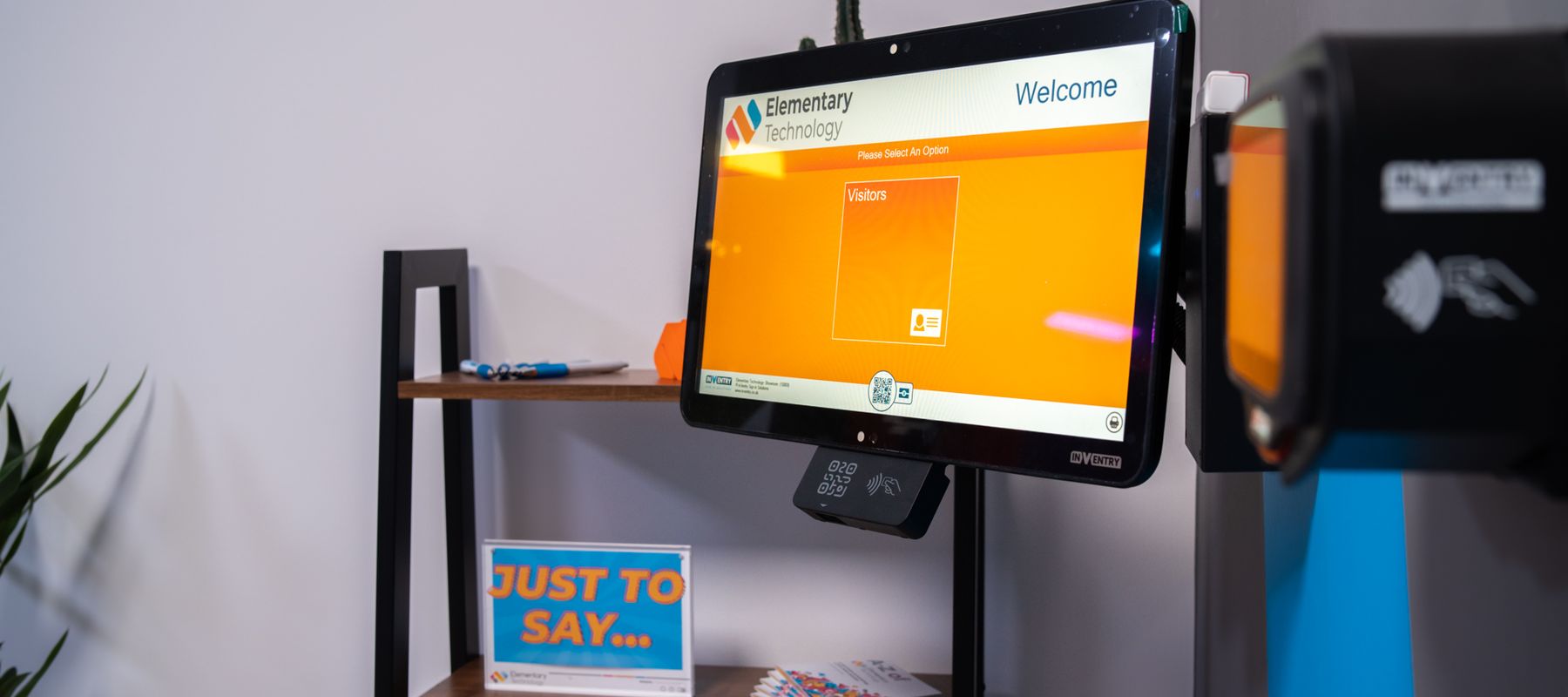
For the external entrance, we typically specify a Paxton video door entry panel with a colour display at reception, connected to the access control system. Staff see who is at the door on the display before releasing the lock. Visitors who are admitted then enter a reception lobby - still outside the main building - where they sign in using a visitor management system before a second door is released into the school itself.
Staff access is managed by proximity card or fob, with different access levels assigned by role. The caretaker can access plant rooms and external stores that teaching staff cannot. Contractors are issued temporary credentials with time-limited access to specific areas only, and those credentials are removed when the job is complete. Every access event is logged with a timestamp and user identity.
The audit trail: your evidence for Ofsted
One of the most underappreciated features of a properly configured access control system is the audit trail. If an incident occurs on site - a safeguarding concern, a theft, an allegation against a member of staff - the access log tells you who was in which part of the building and when. That information is often critical for investigations and for providing evidence to police or the local authority designated officer (LADO).
When Ofsted inspectors ask your DSL to demonstrate that site access is controlled, being able to pull up a report showing every entry event from the past month - with names, times and door locations - is a far more compelling response than pointing to a paper visitor book. Inspectors are increasingly familiar with what a well-configured access control system looks like, and the absence of one is becoming harder to justify.
What a site survey will tell you
Every school site is different. A Victorian two-storey building with six separate entrances presents different challenges to a single-storey 1970s primary with one main entrance and a perimeter fence. A site survey - which we carry out free of charge - walks every entry point, maps the visitor and staff flow, and identifies the gaps between your current provision and what KCSIE and Ofsted would expect to see.
We always involve the DSL and the business manager in the survey, because the technical specification needs to align with your safeguarding policy and your operational reality. A system that staff find difficult to use will be bypassed - propped doors, shared fobs, visitors let through without signing in. The best access control system is the one your staff will actually use correctly, every day.
If your current access control is more than eight years old, was installed by a company that no longer exists, or relies primarily on keypads with shared codes, it is worth having a survey before your next Ofsted inspection rather than after it.
Interested in our services?
Our engineers cover Coventry, Warwickshire and the wider Midlands. Get a free, no-obligation site survey.