
Visitor Management in Schools: Why a Paper Signing-In Book Is No Longer Good Enough
Most schools have a visitor signing-in process. Far fewer have one that actually provides the safeguarding assurance it is supposed to deliver. A paper book on a reception desk is a process. A digital visitor management system is evidence.
Walk into the reception of almost any school in the country and there is a book on the desk where visitors are asked to sign in. Name, organisation, time of arrival, who they are visiting. In many schools, this is the entirety of the visitor management process. The book fills up, gets filed somewhere, and is occasionally retrieved when Ofsted asks to see it.
The problem is not that paper signing-in books are wrong in principle. The problem is what they do not do. They do not verify identity. They do not check the visitor against the Disclosure and Barring Service register of individuals who are barred from working with children. They do not produce an instant report of who is currently on site. They do not integrate with the door access control system to ensure the visitor only accesses the areas they are supposed to access. They are, in safeguarding terms, a record of who claimed to be on site - not evidence of who actually was.
What KCSIE says about visitors
Keeping Children Safe in Education requires schools to have processes for managing visitors that are consistent with their safeguarding policy. The guidance is deliberately non-prescriptive about specific systems, but it is clear about the outcomes: schools should be able to verify the identity of visitors and ensure that any visitor who requires a DBS check has had one before they are given unsupervised access to pupils.
The distinction between supervised and unsupervised access is critical. A delivery driver, a parent attending a scheduled meeting, or a visitor from the local authority attending a review - all supervised, all required to pass through reception, none requiring a DBS check. A contractor who will be working alone in an area of the school where pupils are present, a regular volunteer, a peripatetic music teacher from an external agency - these are different. Unsupervised access to pupils requires either a DBS check or continuous supervision by a member of staff who has been checked.
The practical challenge for schools is knowing, in real time, which visitors are on site, what level of access they should have, and whether the DBS position for each has been verified. A paper book cannot answer any of these questions quickly. A digital visitor management system can answer all of them in seconds.
What a digital visitor management system actually does
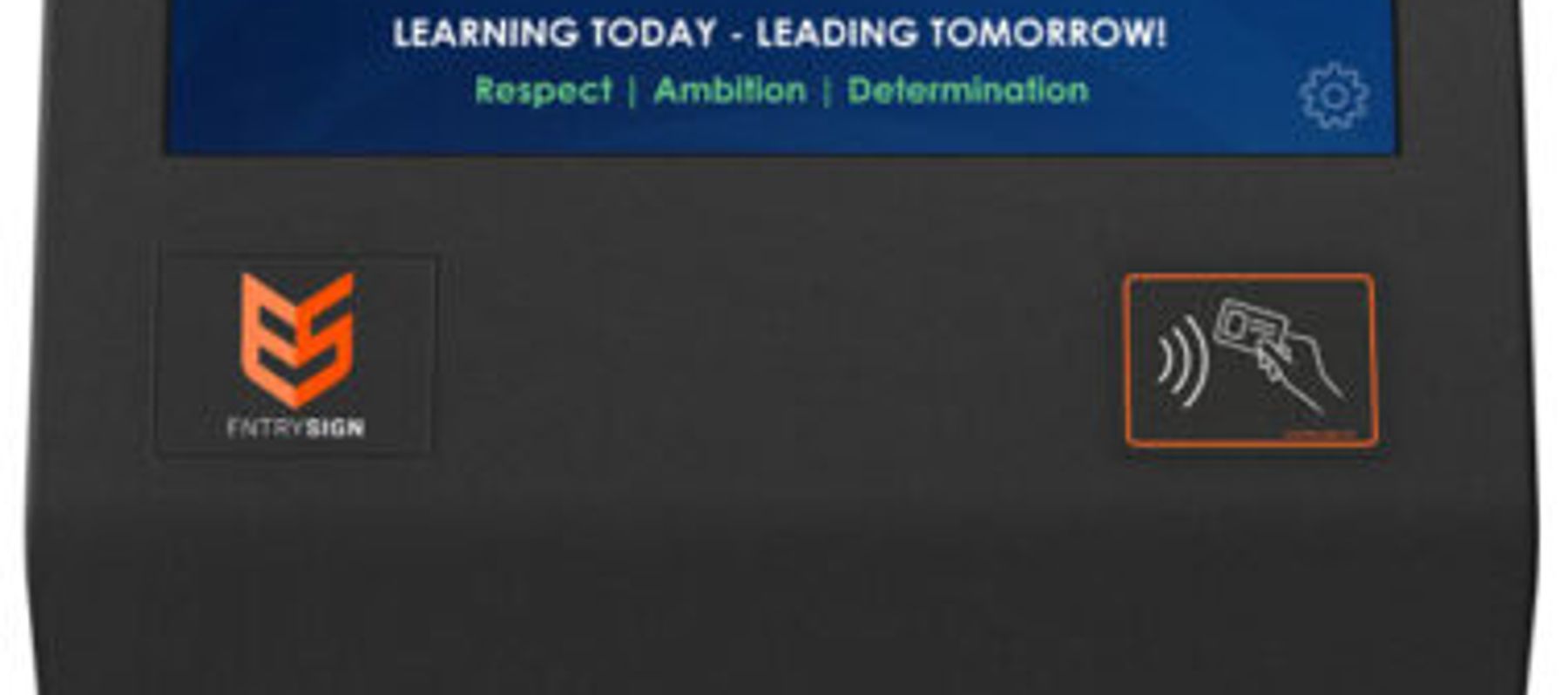
Modern visitor management systems - Inventry, Veristream, and several others are widely used in UK schools - work at the point of check-in rather than as a passive record. When a visitor arrives, they are checked in on a tablet or kiosk at reception. The system can prompt staff to verify ID, record the reason for the visit, and flag whether the visitor is on the school's expected visitors list.
DBS checking integration varies by system. Some will flag a visitor as requiring a check if they are not on the school's pre-approved list of contractors or regular visitors. Some integrate with barring register lookups - though automatic, real-time barring register checks against the DBS system are not available to most schools as a live feed; the process still requires manual verification. What the system does is create a structured workflow that ensures the check happens, is recorded, and is reviewable.
Photo capture at check-in means there is a record of who was physically present, not just who wrote a name in a book. Badge printing means visitors are visibly identifiable on site - a member of staff encountering an unfamiliar face in a corridor can see immediately whether they are wearing a current visitor badge or should not be there. Some systems print time-limited badges that visually expire, so a badge from a previous visit cannot be reused.
Integration with access control
The most robust visitor management setups integrate the visitor system with the door access control system. When a visitor checks in, a temporary credential is issued that gives them access only to the areas they need for the duration of their visit. When they sign out, the credential is revoked. This is not a theoretical security feature - it is the mechanism that prevents a visitor who has legitimately checked in at reception from then accessing areas of the school they should not be in.
We typically implement this using Paxton Net2 Pro with a visitor management integration layer. The visitor's check-in at reception generates a temporary Paxton credential - a QR code or PIN - that opens the relevant internal doors for the duration of the visit. The access event log records every door the visitor opened and when. If there is ever a question about where a visitor was on a given day, the answer is in the system.
For schools that already have Paxton access control installed, the integration can often be implemented without significant hardware changes. The incremental cost of adding visitor management functionality on top of an existing access control system is considerably less than installing both from scratch.
The evacuation argument
Fire safety provides a separate and equally compelling argument for digital visitor management. Under the Regulatory Reform (Fire Safety) Order 2005, the responsible person must be able to account for everyone on the premises in the event of an evacuation. A paper signing-in book does not produce a real-time list of who is currently on site - it tells you who signed in, minus anyone who may have already signed out, assuming they remembered to do so.
A digital visitor management system produces a live roll call at the touch of a button. Fire marshals can access it on a tablet or phone at the muster point. The list updates as visitors check out. If a contractor signed in at 8.30 and signed out at 11.00, they are not on the evacuation list at 14.00. If they have not signed out and the system shows them as still on site, a marshal knows to account for them.
In a school with 60 staff, 900 pupils and - on any given day - between five and fifteen visitors including contractors, peripatetic teachers and local authority personnel, being able to produce an accurate site occupancy list in 30 seconds rather than 3 minutes is a meaningful difference. In a real emergency, it is a significant one.
Making the case internally
The most common objection to digital visitor management in schools is cost. Licenced visitor management software typically costs between £500 and £2,000 per year depending on the system and the number of sites. Hardware - a tablet, a badge printer - adds to the initial outlay. For a school budget under pressure, this is a genuine consideration.
The counter-argument is the cost of getting it wrong. An Ofsted inspection that raises concerns about visitor management processes can result in a monitoring inspection. A safeguarding incident that is compounded by inadequate visitor records is a far more serious matter. A fire evacuation in which a visitor cannot be accounted for triggers questions that a paper book cannot answer. The cost of the system needs to be weighed against the cost and consequences of the alternatives.
We are not visitor management software vendors - we are security and communications engineers. But visitor management is something we discuss on almost every school security survey we carry out, because the gap between what schools have and what they need in this area is consistently large. If it is something your school is looking at, we are happy to discuss how it integrates with access control and what the hardware requirements look like.
Interested in our services?
Our engineers cover Coventry, Warwickshire and the wider Midlands. Get a free, no-obligation site survey.